When to Get a New Roof? Expert Signs & Roof Repair Des Moines Guide
Your roof does not suddenly fail. It breaks down over time, often quietly, until the damage becomes too obvious to ignore. Many homeowners first notice a problem when a stain appears on the ceiling or water starts dripping during a storm. At that point, the issue has usually been developing for months. If you are thinking about roof repair Des Moines homeowners often put off, learning how to recognize early warning signs can help you avoid major repairs and protect your home.
Why Most Homeowners Miss Early Roof Damage
Roof systems are complex, and most of the critical components are hidden from view. Because of this, homeowners tend to rely on visible problems before taking action. That approach often leads to delayed decisions.
In reality, water intrusion rarely shows up immediately. It can move through layers of shingles, underlayment, and insulation before reaching your ceiling. By the time you see a stain, the damage has already spread.
Ryan Johnson, a roofing professional from Right Roofing and Siding, with years of field experience, often sees this firsthand. Homeowners will say their roof is fine because they have not noticed a leak. Then an inspection reveals multiple problem areas that have been there for months. That gap between perception and reality is what drives up repair costs.
Regular inspections and awareness are what separate minor fixes from major replacements. When you understand how roofs fail, you can catch problems before they escalate.
The Most Obvious Signs Your Roof Is Failing
Some signs are easy to spot without climbing a ladder. These are often the first indicators that your roof is approaching the end of its lifespan.
Missing Shingles
Shingles act as the first line of defense against water. When they are missing, that protection is gone.
Even a small section of exposed roof can allow water to seep in during rain. Wind can also lift surrounding shingles, making the problem worse. This is not something to monitor over time. It requires immediate attention.
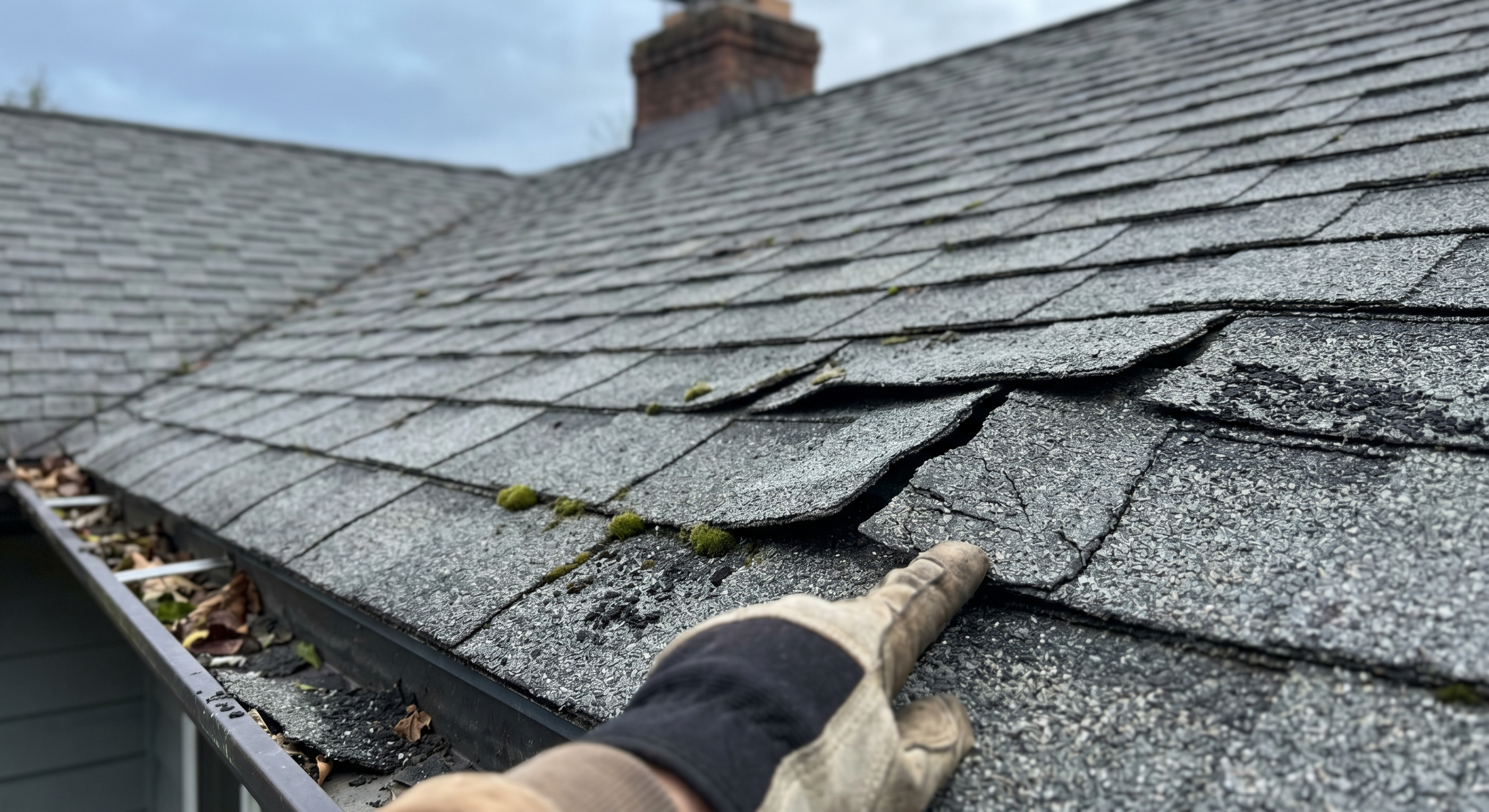
Curling or Buckling Shingles
Shingles should lay flat and uniform. When they begin to curl or buckle, it usually means they are deteriorating.
This can happen due to prolonged sun exposure, poor ventilation, or natural aging. While it may look minor from the ground, curling shingles signal that the material is no longer sealing properly. Water can begin to penetrate beneath them.
Sagging Roof Deck
A sagging roof is a structural concern. It often indicates that moisture has weakened the decking underneath.
This type of damage does not resolve on its own. If you notice a dip or uneven section, it is important to have it inspected right away. Ignoring it can lead to more serious structural issues.
Granule Loss in Gutters
Asphalt shingles are coated with granules that protect them from ultraviolet rays and weathering.
Over time, these granules wear off and collect in gutters. While some loss is normal, excessive buildup is a sign that your shingles are breaking down. Once the protective layer is gone, the shingles deteriorate more quickly.
Interior Warning Signs You Should Never Ignore
Many of the most important clues are found inside your home. These signs often indicate that damage has already progressed beyond the surface.
Ceiling Stains and Discoloration
Water stains are one of the clearest signs of a roofing problem.
They usually appear as brown or yellow spots and can grow over time. By the time these stains become visible, water has already traveled through multiple layers of your roof.
As Ryan Johnson explains, homeowners often underestimate how long leaks have been present. Insulation can absorb moisture and dry out repeatedly, delaying visible signs. When the stain finally appears, the issue is no longer minor.
Rising Energy Bills
Your roof plays a major role in regulating indoor temperature. When it is compromised, your home becomes less efficient.
Poor ventilation or damaged insulation can force your heating and cooling systems to work harder. If your energy bills are increasing without a clear reason, your roof may be contributing to the problem.
Attic Moisture and Light Exposure
The attic is one of the best places to detect early roof issues.
If you see light coming through the roof boards, there is a breach in the structure. Moisture is another warning sign. During colder months, warm air from your home rises into the attic and condenses on the underside of the roof.
This can lead to rusted nails, mold growth, and even dripping water. In severe cases, contractors describe attics that appear to be raining inside. These conditions accelerate deterioration and shorten the life of your roof.
Hidden Roof Damage That Requires Professional Inspection
Some types of damage cannot be identified from the ground. These issues require trained professionals who know what to look for.
Hail Damage
Hail can cause subtle but serious damage to shingles. It may leave small impact marks that weaken the material without creating obvious holes.
Because the damage is not always visible, many homeowners are unaware of it. Over time, these weakened areas can lead to leaks. A professional inspection is often the only way to confirm whether hail has affected your roof.
Poor Installation or Weak Sealing
A roof can fail prematurely if it was not installed correctly.
Seams, flashing, and penetrations are critical points that must be sealed properly. If they are not, water can find its way in even if the shingles themselves are intact.
Ryan Johnson compares this to a rain jacket. The fabric may be waterproof, but if the seams are not sealed, water will still get through. The same principle applies to roofing systems.
Ventilation Problems
Ventilation is often overlooked, yet it plays a key role in roof performance.
Without proper airflow, heat and moisture build up in the attic. This can cause materials to warp and degrade more quickly. Over time, poor ventilation can shorten the lifespan of your roof and lead to costly repairs.
When to Call a Roofer Right Away
Knowing when to act is just as important as recognizing the signs.
Call a professional immediately if you notice missing shingles, curling shingles, sagging areas, or interior water stains. These issues indicate that your roof may already be compromised.
For less urgent concerns like granule loss or algae growth, scheduling an inspection within a reasonable timeframe is still important. Addressing these early can prevent them from becoming major problems.
How Weather Accelerates Roof Damage
Weather conditions have a direct impact on how quickly a roof deteriorates.
In areas with frequent storms, roofs are exposed to constant stress. Heavy rain can exploit weak spots, while temperature changes cause materials to expand and contract.
Hail is particularly damaging because it can weaken shingles without leaving obvious signs. Wind can also lift shingles and break seals. Even if you were not home during a storm, your roof may have sustained damage.
That is why post-storm inspections are so valuable. They help identify issues before they develop into leaks.
Why Your Neighbor’s Roof Matters
It is common to see several homes in the same neighborhood replacing their roofs around the same time.
This often happens because homes built together use similar materials and age at a similar rate. When one roof reaches the end of its lifespan, others may follow.
This does not mean you need to replace your roof immediately. However, it is a good reason to have it inspected. A proactive approach can help you plan ahead instead of reacting to unexpected problems.
The Real Cost of Waiting Too Long
Delaying roof repairs can lead to significantly higher costs.
A small issue like a missing shingle may seem minor, but it can allow water to enter and damage insulation, drywall, and structural components. Once water reaches the interior, repairs become more complex and expensive.
Contractors frequently encounter situations where early intervention could have prevented major damage. By the time the problem becomes visible, multiple layers of the home may need to be repaired.
Taking action early is one of the most effective ways to control costs and protect your investment.
How Modern Tools and Expert Guidance Help Homeowners
Technology has made it easier for homeowners to stay informed about their roof’s condition.
Online resources and AI tools can help identify potential warning signs and provide rough estimates. However, they cannot replace a hands-on inspection.
Roofing requires experience and attention to detail. Subtle issues can be missed without proper training. Working with a knowledgeable professional ensures that problems are identified accurately and addressed correctly.
Combining modern tools with expert guidance gives homeowners the best chance of making informed decisions.
Proactive Roof Maintenance Tips
Regular maintenance is the key to extending the life of your roof.
Start by inspecting your roof from the ground a few times each year. Look for missing or damaged shingles and check your gutters for granule buildup. Inside your home, watch for ceiling stains and signs of moisture.
Your attic should also be inspected periodically. Look for light exposure, condensation, or unusual odors. These can all indicate underlying issues.
After major storms, take a few minutes to assess your property. If anything looks different, schedule a professional inspection. Small steps like these can prevent larger problems down the road.
Watch the Full Podcast for Expert Insights
If you want to hear how these warning signs show up in real situations, the full podcast episode of Right at Home provides valuable insight from an experienced roofing professional. You will hear practical examples, clear explanations, and real-world scenarios that bring these concepts to life.
Watching the full conversation on YouTube will give you a better understanding of what to look for and when to act. It is one of the best ways to learn how professionals approach roof inspections and maintenance. If you are considering roof repair Des Moines homeowners rely on, this is a smart next step.
Frequently Asked Questions
How often should I have my roof inspected?
A professional inspection should be done at least once a year. It is also recommended after major storms to check for hidden damage.
Can I inspect my roof myself?
You can look for visible signs from the ground, but climbing onto your roof is not advised. Professionals have the tools and training to inspect it safely.
What is the average lifespan of a roof?
Most asphalt shingle roofs last between 20 and 30 years. Factors like weather, ventilation, and maintenance can affect this timeline.
Does moss or algae mean my roof is failing?
Not necessarily. It can be a sign of aging or moisture retention. An inspection can determine whether it is a cosmetic issue or something more serious.
Will my insurance cover roof damage?
Coverage depends on the cause. Storm-related damage is often covered, while general wear and tear is usually not.
How do I know if a leak is serious?
Any leak should be taken seriously. By the time water becomes visible, the problem has likely been present for a while.
Should I repair or replace my roof?
This depends on the extent of the damage. Minor issues can often be repaired, but widespread problems may require replacement.
What should I do after a storm?
Check for visible damage around your home and schedule a professional inspection to identify any hidden issues.