Roof Repair vs. Replacement: Guide for Roof Repair Des Moines
Your roof is easy to ignore—until it isn’t. One small leak or missing shingle can quickly turn into a stressful and expensive situation. If you’re weighing roof repair Des Moines homeowners often face the same question: fix the issue or replace the entire system? The right answer isn’t always obvious, but understanding how roofs age, fail, and perform can help you make a confident decision.
Why Your Roof Is More Than Just Shingles
Most homeowners think of a roof as a layer of shingles. In reality, it’s a complete system. It includes underlayment, ventilation, flashing, and structural components that all work together to protect your home.
When one part fails, it can impact everything else. A small leak rarely stays small. Moisture can spread into insulation, weaken wood, and even impact indoor air quality. That’s why even minor issues deserve attention early.
A properly functioning roof does more than keep water out. It helps regulate temperature, improves energy efficiency, and plays a major role in your home’s value. When you start thinking about your roof as a system—not just shingles—you begin making smarter, long-term decisions.
The Early Warning Signs You Shouldn’t Ignore
Roof problems rarely appear overnight. Most start with subtle signs that are easy to overlook until they become more serious.
Missing or curling shingles are often the first visible clue. You might also notice granules collecting in your gutters, which indicates that your shingles are breaking down. Inside your home, water stains on ceilings or walls suggest moisture is already getting through.
Sagging areas or dips in your roofline can point to structural concerns. Algae or moss growth may seem cosmetic, but it often signals trapped moisture that can shorten the lifespan of your roof.
As Ryan Johnson of Right Roofing and Siding explained in an episode of Right at Home, “some warning signs include missing or curling shingles, granule loss… concave or sagging areas, water stains on your ceiling, or heavy algae growth.” These aren’t random issues—they’re signals that your roof may be deteriorating as a system, not just in one spot.
Another often overlooked sign is increased energy bills. Poor ventilation or hidden damage can force your HVAC system to work harder, especially during extreme temperatures. When your roof isn’t performing properly, it can quietly impact your home’s overall efficiency without obvious exterior damage.
The earlier you address these warning signs, the more options you’ll have—and the less expensive the solution is likely to be.
When a Roof Repair Makes the Most Sense
Not every roofing issue requires a full replacement. In many cases, a targeted repair is the most practical and cost-effective solution.
Isolated Damage
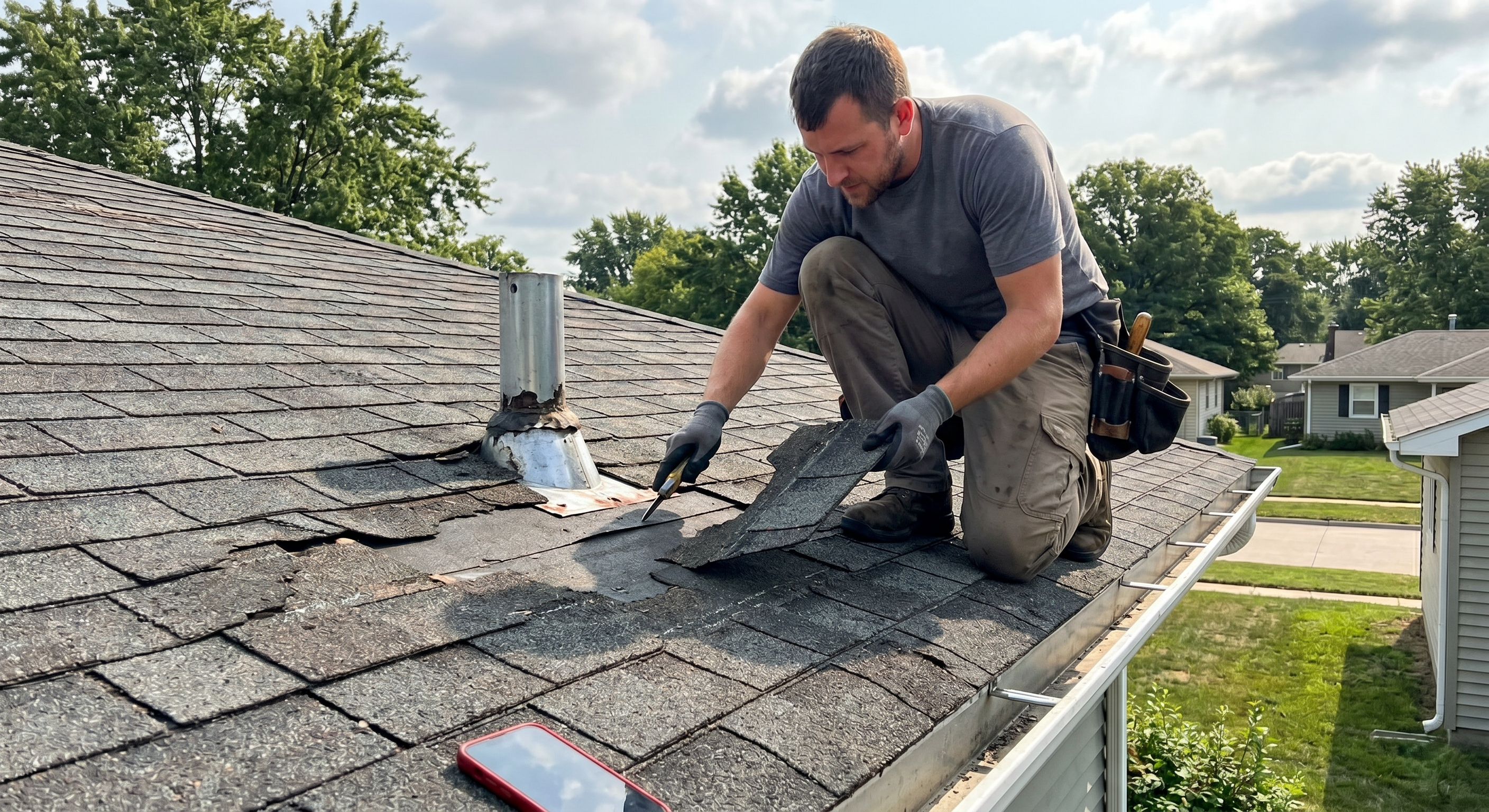
If the issue is limited to a specific area—such as flashing around a vent or a small section of missing shingles—a repair can resolve the problem quickly. These fixes are usually straightforward and don’t require major disruption to your home.
Ryan highlighted this clearly when he mentioned that something like a vent pipe flashing issue can often be fixed for a few hundred dollars. These are the types of problems where repair is the obvious choice.
Newer Roofs
If your roof is relatively new, repairs are almost always the right choice. Most roofing materials are designed to last decades, so isolated problems often point to installation issues rather than overall wear.
Ryan shared an example of a three-year-old roof that needed several thousand dollars in corrections due to poor installation. Even then, replacing the entire roof didn’t make sense because the system still had years of life left.
This reinforces an important idea: not all problems are about age—some are about how the roof was installed in the first place.
Short-Term Plans
Your future plans matter. If you’re planning to move within the next few years, investing in a full replacement may not be necessary. A repair can provide enough durability to get you through your remaining time in the home.
As Ryan put it, “Sometimes a $400 repair is all you need.” That kind of honesty reflects a contractor who is focused on what’s best for the homeowner—not just the biggest sale.
When Roof Replacement Becomes the Better Investment
While repairs can extend the life of your roof, there comes a point when replacement is the more practical decision.
Age Matters
Most asphalt shingle roofs last between 18 and 25 years, depending on climate and installation quality. Once your roof approaches that range, repairs become less reliable.
Ryan noted that once a roof passes the 20-year mark, homeowners should start planning for replacement. At that stage, investing heavily in repairs often doesn’t make financial sense.
Widespread Issues
If your roof has multiple leaks, widespread shingle damage, or recurring issues after storms, it may be failing as a system.
Ryan emphasized that during inspections, they don’t just look at the problem area—they evaluate the entire roof. If multiple weak points are found, it often signals a bigger issue that repairs alone won’t fix.
Long-Term Value
If you plan to stay in your home for the long haul, a new roof offers peace of mind. You won’t have to deal with ongoing repairs or unexpected issues.
It also improves curb appeal and can increase your home’s resale value. In many cases, replacement isn’t just a cost—it’s a long-term investment in your home.
Understanding the 25% Rule
A common guideline in the roofing industry is the 25% rule. If the cost of repairs approaches or exceeds 25% of the cost of a full replacement, it’s usually more practical to replace the roof.
Ryan explained it simply: if you’re spending a significant amount just to squeeze a few more years out of an aging roof, you’re often overpaying for a temporary solution.
This rule isn’t absolute, but it provides a helpful benchmark. When combined with the age and condition of your roof, it can guide smarter financial decisions.
The Hidden Cost Trap of Repeated Repairs
One of the biggest mistakes homeowners make is falling into a cycle of repeated repairs.
At first, a small repair doesn’t seem like a big deal. But if you’re calling a contractor every year—or even every few months—those costs begin to add up.
Ryan described this perfectly: homeowners end up spending $500 to $1,500 repeatedly over time. After a few years, that can add up to thousands—without ever truly solving the problem.
This is what he referred to as the “cost trap.” Instead of fixing the root issue, you’re stuck managing symptoms.
There’s also the stress factor. Constantly worrying about leaks, storms, or the next repair can take a toll. For many homeowners, the peace of mind that comes with a new roof is just as valuable as the financial calculation.
How Professionals Evaluate Your Roof
A trustworthy roofing contractor won’t just focus on the visible issue. They’ll evaluate the entire system.
Ryan made this clear when he explained that inspections go beyond the problem area. Contractors look for lifted shingles, broken seals, and other weak points that may not be leaking yet—but could soon.
They also consider your goals. Are you staying in the home long-term? Are you trying to minimize upfront costs? Do you want peace of mind?
The best contractors don’t push one answer. They present options and let homeowners make informed decisions.
Ryan summed it up well: “We evaluate every roof the same way… then we give you the information you need to make the best decision for your situation.” That approach positions experienced professionals as trusted advisors—not salespeople.
In addition, a thorough evaluation should include clear documentation. Homeowners benefit from photos, written assessments, and straightforward estimates that outline both repair and replacement paths. This level of transparency helps you compare options, understand risks, and make decisions without feeling rushed or uncertain.
Real-World Decision Factors Every Homeowner Should Consider
Choosing between repair and replacement isn’t just about the condition of your roof—it’s about your overall situation.
If you’re planning to stay in your home for many years, a replacement may provide better long-term value. If you’re moving soon, a repair could be the smarter choice.
Ryan also pointed out that peace of mind plays a role. If you’re constantly worrying about your roof, that alone may justify replacement.
On the other hand, he shared a story about a homeowner who was ready to replace an 18-year-old roof. After inspecting it, Ryan recommended waiting another 5–7 years instead. That kind of honesty builds trust and reinforces the importance of working with the right contractor.
Make the Decision Before It’s Urgent
The worst time to make a roofing decision is during an emergency. When water is actively coming into your home, your options become limited and more expensive.
Proactive inspections and early action give you more control. You can plan ahead, compare options, and choose the solution that truly fits your needs.
There’s no universal answer. But with guidance from experienced professionals who prioritize honesty, you can make a decision that protects both your home and your budget.
Watch the Full Podcast Episode
If you want to hear how experienced professionals walk homeowners through these decisions in real conversations, watch the full podcast episode of Right at Home with Ryan Johnson of Right Roofing on YouTube. You’ll gain practical insights, real examples, and a deeper understanding of what goes into making the right call. Before you move forward with your next roof repair Des Moines homeowners rely on, take the time to learn from experts who focus on doing the job right the first time.
Frequently Asked Questions
How do I know if my roof needs repair or replacement?
Start by considering the age of your roof, the extent of the damage, and how often problems occur. Isolated issues on a newer roof typically call for repairs, while widespread or recurring problems often indicate replacement is needed.
How long does a typical roof last?
Most asphalt shingle roofs last between 18 and 25 years. However, factors like weather conditions, ventilation, and installation quality can significantly affect lifespan.
Is it cheaper to repair or replace a roof?
Repairs are usually cheaper upfront, but repeated repairs can become more expensive over time. Replacement requires a larger investment but often provides better long-term value.
What is the 25% rule in roofing?
The 25% rule suggests that if repair costs exceed 25% of the cost of a new roof, it’s typically more cost-effective to replace the roof instead.
Can I repair my roof myself?
While small fixes might seem manageable, most repairs require professional expertise. Improper repairs can lead to bigger and more costly problems.
How often should I have my roof inspected?
It’s recommended to have your roof inspected at least once a year and after major storms. Regular inspections help identify problems early.
Does a new roof increase home value?
Yes. A new roof improves curb appeal, increases buyer confidence, and can make your home more attractive on the market.
What causes roofs to fail early?
Common causes include poor installation, inadequate ventilation, and extreme weather conditions. Regular maintenance can help extend the life of your roof.