
Roof Leak vs Attic Condensation Iowa | Right Roofing
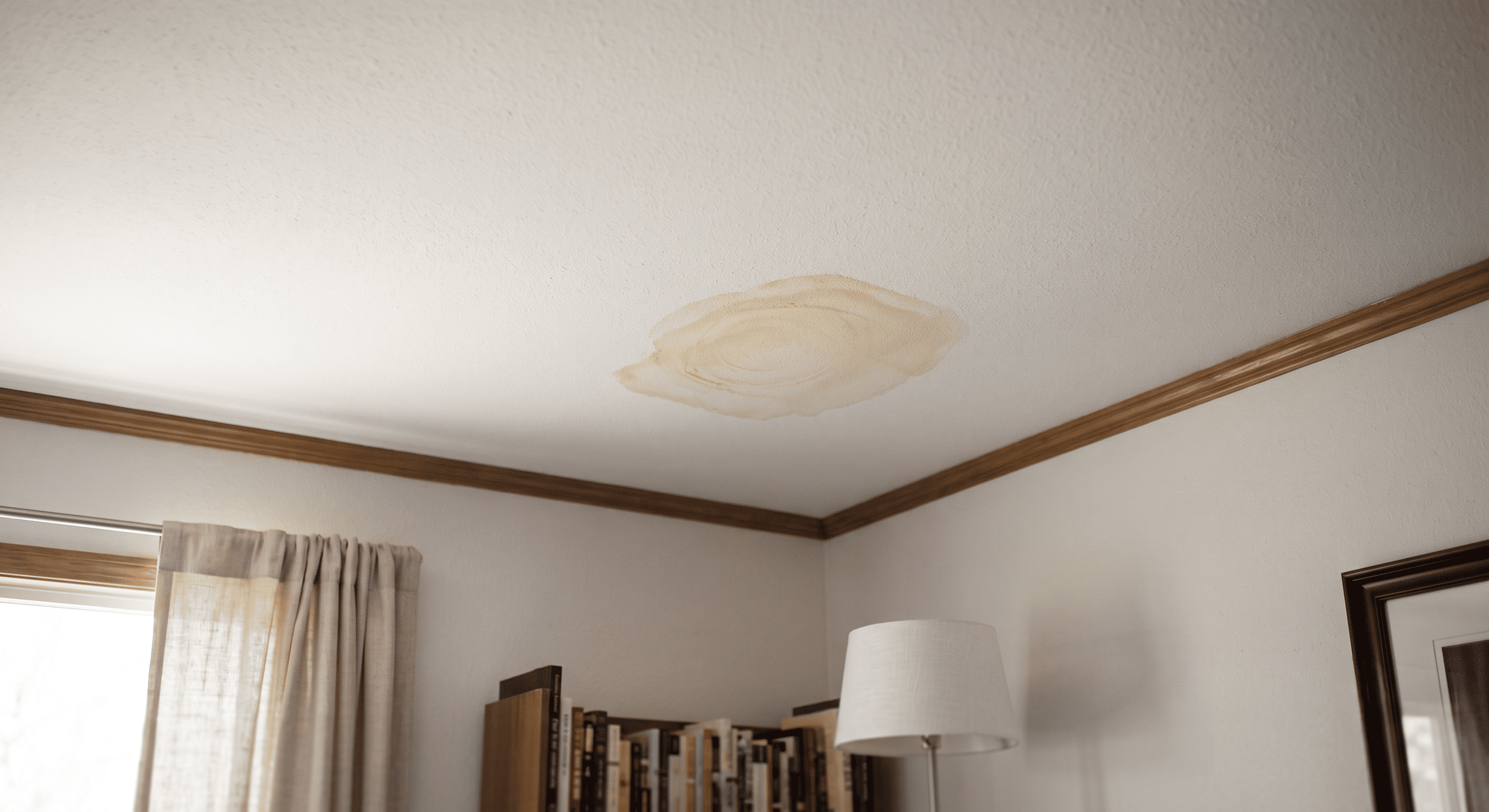
Is That Ceiling Stain a Roof Leak or an Attic Ventilation Problem?
A ceiling stain does not always mean your roof is leaking. In Iowa homes, a brown spot can come from a true roof leak, attic condensation, poor ventilation, bathroom exhaust fan problems, or worn pipe flashings. The real question is not just where the water is showing up. It is why the water is there. That is the difference in roof leak vs attic condensation Iowa diagnosis.
Does a Brown Spot on the Ceiling Always Mean You Have a Roof Leak?
A brown spot on the ceiling does not always mean you have an active roof leak. A ceiling stain is a warning sign, not a final diagnosis. Water can enter through damaged flashing, worn roof materials, or roof penetrations, but it can also form inside the attic when warm, moist indoor air reaches cold surfaces.
Ryan Johnson, owner of Right Roofing in Des Moines, explained on the Right at Home podcast that many homeowners call after seeing a small brown spot, especially in February or March after a warm-up. Those calls often involve ventilation or moisture problems, not just rainwater entering through the roof.
The key takeaway is simple: a ceiling stain tells you water is present. It does not tell you where the water started.
How Can Attic Condensation Look Like a Roof Leak?
Attic condensation can look like a roof leak because the result is the same: water reaches the ceiling drywall and leaves a brown stain. The difference is the source. A roof leak starts outside the home. Attic condensation starts inside the home when humid air meets cold attic materials.
During winter, warm indoor air carries moisture from showers, cooking, laundry, and daily living. If that air gets into the attic, it can hit the cold underside of the roof deck and turn into frost. Ryan described how frost often forms on metal nails that poke through the roof decking. When the attic warms up, that frost melts and can drip into insulation and drywall.
As that water moves through dust, insulation, and building materials, it can create a brown spot that looks exactly like a roof leak.
Why Do Ceiling Stains Show Up During Iowa’s Winter-to-Spring Warm-Up?
Ceiling stains often show up during Iowa’s winter-to-spring warm-up because moisture can build quietly during cold weather, then melt when temperatures rise. A homeowner may see no issue during the coldest weeks of winter, then suddenly notice a stain after a few warmer days.
That timing is important. If the stain appears after heavy rain, the roof needs to be checked for an active leak. If it appears when there has not been rain or snow for days or weeks, attic condensation becomes more likely.
Ryan said Right Roofing commonly sees ventilation problems show up during the winter-to-spring transition. In Iowa, fast temperature swings, snow, ice, and spring moisture can make attic ventilation problems more obvious.
The timing of a ceiling stain is one of the strongest clues.
How Do Bathroom Exhaust Fans Cause Attic Moisture Problems?
Bathroom exhaust fans cause attic moisture problems when they move humid air out of the bathroom but fail to move it outside the home. The fan may sound like it is working, but if the duct ends in the attic, that moisture is still trapped inside the house.
Ryan explained that older homes sometimes have cheap plastic tubing connected to the bathroom fan and left loose in the attic. That setup can send warm, wet air into a cold attic, where it condenses on roof decking, nails, and other surfaces.
Bathroom fan ducts should be insulated and properly vented through the roofing system to the outside. Ryan also recommends running the bathroom fan during the shower and for 10 to 15 minutes afterward. That extra time helps remove moisture before it settles in the ductwork or attic.
A bathroom fan should not just clear the mirror. It should move moisture completely out of the home.
What Does Proper Attic Ventilation Include?
Proper attic ventilation includes intake and exhaust working together. Intake brings fresh air into the attic, usually through soffit vents. Exhaust lets warm, moist air leave through ridge vents, roof vents, or active ventilation.
Right Roofing inspects attic ventilation as a full system. Ryan said the company checks soffit intake, looks for clogged vents, reviews roof ventilation, and evaluates whether the attic has enough airflow for the home’s design.
This matters because a home can have roof vents and still be under-ventilated. Some hip-style homes, for example, may have only a short section of ridge available for ridge vent. In those cases, ridge vent alone may not provide enough exhaust.
Good ventilation is not one-size-fits-all. It depends on the roof design, attic space, intake, exhaust, insulation, and moisture sources inside the home.
What Roof Problems Can Cause a Real Ceiling Leak?
Real roof leaks can come from damaged flashing, worn pipe flashings, deteriorated roof penetrations, poor installation, storm damage, or aging materials. A ceiling stain should never be dismissed as condensation without checking the roof first.
Ryan identified pipe flashings as one of the most common leak sources Right Roofing sees. Depending on the flashing style, the rubber gasket can wear out around the 10-to-15-year range.
That kind of issue can look serious from inside the home, but it may not mean the entire roof needs to be replaced. Sometimes a homeowner sees a stain and assumes the worst. In reality, the roof may still have years of life left, and the real fix may be a flashing repair.
A roof leak should be confirmed by evidence, not assumed from a stain alone.
What Should Homeowners Check Before Assuming They Need a New Roof?
Homeowners should pay attention to when the stain appeared, where it is located, and whether it is changing. These details help a roofing professional diagnose the issue faster.
Start with timing. Did the stain appear after rain? After snow melted? During a warm-up? If there has not been recent precipitation, attic moisture may be involved.
Next, look at the room. Bathroom ceiling stains often deserve a closer look at exhaust fan venting because bathrooms produce a lot of humidity. Also watch whether the stain grows, darkens, feels soft, or returns after being painted.
Most homeowners should not crawl through an attic if they are uncomfortable or unsure where to step. Attics can be dark, cramped, and unsafe. A professional inspection is the safer choice.
The goal is not to guess. The goal is to find the actual cause before spending money.
How Does Right Roofing Diagnose the Source of a Ceiling Stain?
Right Roofing diagnoses the source of a ceiling stain by asking the right questions, inspecting the exterior roof, checking attic conditions, reviewing ventilation, and looking at bathroom fan venting.
Ryan described the process as consultative. Right Roofing asks when the problem appears, whether it happens after rain, whether it is seasonal, and whether the homeowner has noticed active leaks before.
Then the inspection moves to the roof. The team checks flashings, roof penetrations, deterioration, and other possible leak points. If the roof looks sound, the attic inspection becomes critical. That is where moisture, frost, wet insulation, blocked intake, poor exhaust, or bad fan ducting may show up.
Ryan summed up the company’s approach clearly: “At Right Roofing, we always diagnose the actual cause before recommending any work.”
That approach matters because homeowners do not need a sales-first answer. They need the right answer.
How Can a Misdiagnosed Roof Leak Cost Thousands of Dollars?
A misdiagnosed roof leak can cost thousands of dollars if the real problem is a smaller repair, ventilation correction, bathroom fan ducting issue, or warranty-related roof concern. The wrong diagnosis can lead to unnecessary work. Ignoring the issue can also make damage worse.
Ryan gave a clear example. A homeowner may think several leaks mean the whole roof needs replacement. In some cases, the issue may be a few pipe flashings that need attention. He explained that replacing several flashings may cost $500 to $800, while a full roof replacement could cost $15,000 to $20,000.
He also shared a warranty example where Right Roofing helped a customer avoid most of a $28,000 roof cost because the warranty had been properly registered. The customer paid far less out of pocket because the issue was handled through the manufacturer.
The right diagnosis can be the difference between a manageable repair and a major expense.
When Should Des Moines Homeowners Call Right Roofing?
Des Moines homeowners should call Right Roofing when they notice a new ceiling stain, a recurring brown spot, a suspected roof leak, attic moisture signs, or staining that appears during a winter-to-spring warm-up.
A small stain does not need to become a major repair before it deserves attention. Water can damage drywall, insulation, decking, and attic materials. The earlier the issue is inspected, the more options a homeowner usually has.
Right Roofing looks beyond the visible stain. The team checks the roof, attic, intake ventilation, exhaust ventilation, flashings, and bathroom fan venting path. That whole-system view helps homeowners avoid guesswork.
If the stain is small, do not panic. If the stain is growing, do not wait.
Watch the Full Podcast Episode
If you are looking at a ceiling stain and wondering what caused it, stop guessing and get the right diagnosis. A roof leak vs attic condensation Iowa issue can only be solved correctly when the roof, attic, ventilation, and moisture source are checked together.
For a deeper explanation, watch the full Right at Home podcast episode on YouTube. Mike Downer and Ryan Johnson walk through real homeowner scenarios, including bathroom fan moisture, attic frost, roof ventilation, pipe flashing leaks, and how Right Roofing diagnoses the true cause before recommending repairs or replacement.
Frequently Asked Questions About Ceiling Stains and Roof Leaks
Does a ceiling stain always mean the roof is leaking?
No. A ceiling stain can come from a roof leak, but it can also come from attic condensation, bathroom fan moisture, poor ventilation, or worn flashing. The stain shows where water ended up, not where it started.
Why would a ceiling stain appear when it has not rained?
A ceiling stain can appear without recent rain when frost or condensation melts inside the attic. This often happens after cold weather followed by a warm-up.
Can a bathroom exhaust fan cause a ceiling stain?
Yes. A bathroom exhaust fan can cause moisture problems if it vents humid air into the attic instead of outdoors. That moisture can condense, freeze, melt, and stain the ceiling.
How long should I run my bathroom fan after a shower?
Run the bathroom fan during the shower and for about 10 to 15 minutes afterward. Ryan Johnson recommends leaving it on while you brush your teeth after showering.
What is attic condensation?
Attic condensation is moisture that forms when warm, humid indoor air meets cold attic surfaces. In winter, it can freeze as frost, then melt later and create stains that look like roof leaks.
What roof parts commonly cause real leaks?
Common roof leak sources include pipe flashings, damaged flashing, roof penetrations, valleys, chimney areas, deteriorated materials, and installation issues. Pipe flashings are one of the common sources Right Roofing sees.
Do I need a roof replacement if I have multiple ceiling stains?
Not automatically. Multiple stains can come from several roof issues, but they may also point to ventilation, condensation, or smaller flashing problems. A full inspection should come before replacement decisions.