Expert Roof Repair Des Moines - Why New Roofs Fail Early
A new roof should give you peace of mind. It should last decades, not just a handful of years. Yet many homeowners find themselves dealing with leaks, stains, and repairs far sooner than expected. If you’re researching roof repair in Des Moines, you’re already asking the right question: why do roofs fail early in the first place?
The answer isn’t what most people think. It’s not usually the shingles. It’s not the brand. And it’s rarely just “bad luck.” More often than not, the real problem is hidden beneath the surface.
The Biggest Myth in Roofing: It’s Not the Materials
Most homeowners assume that if they invest in high-quality materials, their roof will last 20–30 years without issue. That sounds logical. Better product, better results.
But roofing doesn’t work that way.
Even the best shingles in the world will fail if they’re installed incorrectly. Roofing is a system, not a single product. It includes ventilation, flashing, underlayment, and transitions that all have to work together.
As one seasoned contractor put it during a recent podcast conversation, most failures come down to “basic installation methods” rather than product defects. That insight alone changes how you should think about roofing.
The truth is simple: materials matter, but installation matters more.
Why Roofing Problems Take Years to Show Up
One of the most frustrating aspects of roof failure is how long it takes to become visible. You can have a roof that looks perfect from the outside while slowly failing underneath.
Why Early Damage Stays Hidden
Water intrusion is rarely dramatic at first. It starts small. A tiny gap in flashing. A poorly vented attic. A missed detail during installation.
Over time, moisture builds up. It seeps into insulation. It creates condensation during colder months. Eventually, it finds a way into your living space.
That’s when you see the signs—brown spots on ceilings, peeling paint, or a faint musty smell. By then, the problem has likely been developing for years.
In many cases, homeowners don’t connect these interior issues back to the roof right away. They may think it’s humidity or minor wear and tear. But these subtle warning signs are often the first indicators of deeper roofing problems.
This delayed timeline is why so many homeowners feel blindsided. The roof didn’t suddenly fail. It was installed with a hidden flaw that took time to reveal itself.
The Hidden Installation Mistakes That Cause Early Roof Failure
There’s no single reason roofs fail early. Instead, it’s usually a combination of overlooked details. These are the mistakes most homeowners never see—but they’re the ones that matter most.
Improper Ventilation
Ventilation is one of the most misunderstood aspects of roofing. It doesn’t get much attention, but it plays a critical role in the lifespan of your roof.
Without proper airflow, heat and moisture get trapped in your attic. During winter, warm air rises and condenses on cold surfaces. That moisture doesn’t just disappear—it soaks into wood and insulation.
Over time, this leads to mold, rot, and structural damage. In extreme cases, it can feel like the house is deteriorating from the inside out.
What makes this worse is how common it is. Even newer homes are often built with insufficient ventilation. It’s not always intentional—it’s often a lack of understanding or attention to detail.
Proper ventilation isn’t complicated, but it does require planning. Intake and exhaust need to be balanced. Ridge vents need adequate length. And attic conditions need to be inspected, not assumed.
Flashing Failures
If ventilation is the most misunderstood issue, flashing is the most overlooked.
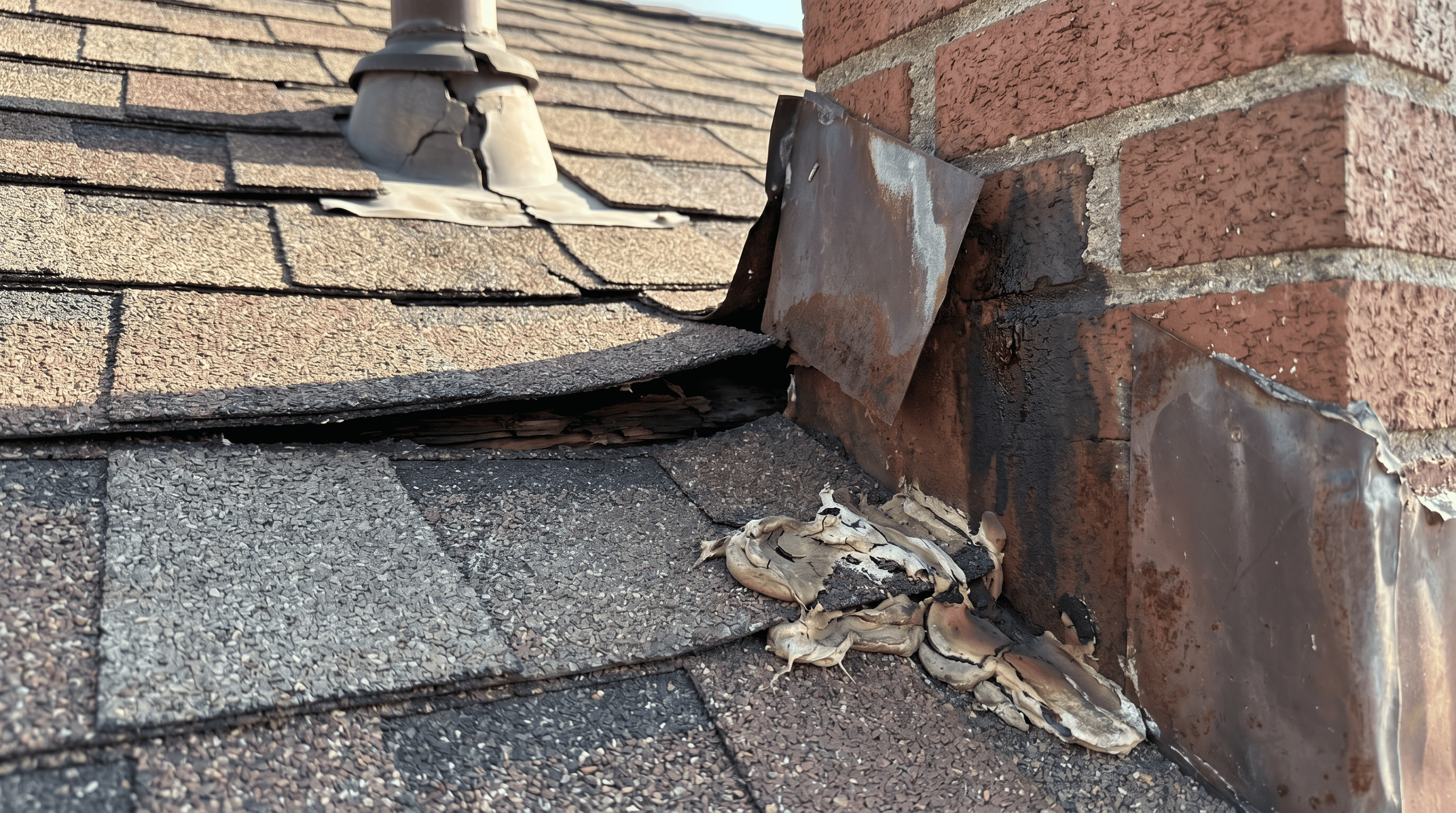
Flashing is what keeps water from entering the vulnerable areas of your roof—around chimneys, walls, and transitions. When installed correctly, it creates a watertight barrier. When done wrong, it becomes a hidden entry point for leaks.
A major issue in the industry is that flashing is often not replaced during roof installations. Contractors may reuse old materials or skip complex areas entirely.
In fact, experienced contractors consistently find that a large portion of roofing issues trace back to improper flashing. That’s not a small detail—it’s one of the most critical parts of the system.
Even worse, flashing problems are rarely visible. They sit behind siding or under shingles, quietly allowing water in over time.
Pipe Flashing Breakdown
Not all failures are dramatic. Some come down to small, inexpensive components that wear out faster than the rest of the roof.
Pipe flashing is a perfect example. These rubber boots seal around plumbing vents and are exposed to the elements year-round.
After 10–12 years, they begin to crack and deteriorate. Once that seal is compromised, water can enter easily.
Here’s where homeowners often get misled. Instead of replacing a small, affordable part, they’re told the entire roof needs to be replaced.
In reality, many of these issues can be fixed quickly and affordably—if diagnosed correctly.
Roof-to-Wall Transitions Done Wrong
Where your roof meets vertical surfaces like walls is one of the most vulnerable areas on your home.
These transitions require precise layering: step flashing, house wrap, siding, and sealing all need to work together. If even one layer is out of place, water can find a path inside.
Unfortunately, these areas are often rushed or avoided altogether because they require more time and skill.
Some contractors rely on caulking as a shortcut. It might look like a fix, but it’s temporary at best. Over time, caulking dries out, cracks, and fails—leaving the original problem untouched.
Skipping Critical Components
A roof isn’t just shingles. It’s a system made up of multiple layers and components that all serve a purpose.
When contractors skip steps—like replacing underlayment, edge metal, or flashing—they compromise the entire system.
It may look fine from the outside. But underneath, it’s a ticking clock.
The problem is that homeowners rarely see these details. They trust that the job was done correctly. Without proper quality control, those assumptions can lead to costly consequences.
The Shortcut Culture in Roofing
To understand why these mistakes happen, you have to look at the industry itself.
In recent years, there’s been a rise in companies that focus more on sales and marketing than craftsmanship. They bring in crews, complete jobs quickly, and move on.
Speed becomes the priority. Quality takes a back seat.
This creates an environment where shortcuts are not just common—they’re expected.
One of the most telling signs of this is repeated patchwork fixes. Homeowners call multiple contractors over the years, each applying a temporary solution without addressing the root cause.
It’s not uncommon to see multiple layers of caulking from different contractors—none of which actually solved the issue.
That’s not just a technical failure. It’s a trust issue.
When Installation Is Done Right, Everything Changes
There’s a reason some roofs last far longer than expected—even when the shingles themselves begin to wear down.
Proper installation protects the structure beneath the surface. It ensures that water is directed away, ventilation is balanced, and every component works together.
There are real-world cases where roofs looked like they were failing from the outside, but once removed, everything underneath was still in excellent condition.
That doesn’t happen by accident. It happens when the details are done right from day one.
How to Tell If Your Roof Was Installed Correctly
Most homeowners don’t know what to look for—and that’s completely normal. Roofing isn’t something you deal with every day.
But there are a few signs that can give you insight.
Recurring leaks are a major red flag. If the same issue keeps coming back, it’s likely not being fixed properly.
Another sign is excessive reliance on surface-level fixes. If a contractor isn’t willing to investigate deeper—like removing siding or inspecting the attic—it’s worth asking why.
On the positive side, a well-installed roof will show consistency. Clean lines, proper ventilation, and no visible patchwork are all good indicators.
How to Avoid These Costly Mistakes
The best way to avoid early roof failure is to focus on the process, not just the price.
Start by asking better questions. How will ventilation be handled? Will flashing be replaced? Will the attic be inspected?
Look for contractors who follow a checklist approach. In the same way pilots rely on checklists for safety, roofing professionals should follow a consistent process for quality control.
Don’t be afraid to go beyond the lowest bid. The cheapest option often leaves out the very details that matter most.
Education is your biggest advantage. The more you understand how roofing systems work, the better decisions you’ll make.
Watch the Full Podcast for Expert Insights
If you want a deeper understanding of what really goes wrong with roofs—and how experienced professionals approach these problems—the full podcast episode of Right at Home is worth your time. You’ll hear real-world examples, honest insights, and practical advice that goes beyond surface-level explanations. It’s the kind of information that can save you years of frustration and unnecessary expenses.
Whether you’re planning a replacement or dealing with ongoing issues, this conversation will help you make more informed decisions. Take a few minutes to watch the full episode and see what most homeowners never get told. And if you’re dealing with ongoing issues or considering roof repair Des Moines homeowners trust, this knowledge will help you move forward with confidence.
FAQs About Early Roof Failure
Why does a new roof start leaking so quickly?
Most early leaks are caused by installation errors, not material defects. Improper flashing, poor ventilation, or missed details can allow water in within a few years.
How long should a properly installed roof last?
A well-installed roof can last 20–30 years or more, depending on the material. Proper installation ensures the system performs as expected.
What is the most common roofing mistake?
Improper flashing and poor ventilation are among the most common issues. Both can lead to long-term damage if not addressed correctly.
Can roof problems be fixed without full replacement?
Yes. Many issues, like pipe flashing failure, can be repaired without replacing the entire roof—if diagnosed accurately.
How can I tell if my attic ventilation is adequate?
Signs of poor ventilation include condensation, mold, and uneven temperatures. A professional inspection is the best way to confirm.
Why do contractors use caulking instead of fixing the problem?
Caulking is a quick, temporary fix. Some contractors use it to avoid more complex repairs that require additional time and skill.
Should flashing always be replaced during a new roof installation?
In most cases, yes. Reusing old flashing increases the risk of leaks and reduces the lifespan of the roof.
What questions should I ask before hiring a roofing contractor?
Ask about ventilation, flashing, inspection processes, and quality control. These answers reveal how thorough the contractor will be.
Watch the Full Podcast for Expert Insights
If you want a deeper understanding of what really goes wrong with roofs—and how experienced professionals approach these problems—the full podcast episode of Right at Home is worth your time. You’ll hear real-world examples, honest insights, and practical advice that goes beyond surface-level explanations. It’s the kind of information that can save you years of frustration and unnecessary expenses.
Whether you’re planning a replacement or dealing with ongoing issues, this conversation will help you make more informed decisions. Take a few minutes to watch the full episode and see what most homeowners never get told. And if you’re dealing with ongoing issues or considering roof repair Des Moines homeowners trust, this knowledge will help you move forward with confidence.
Watch the Full Podcast: Why Roofs Fail Sooner Than They Should