
Composite vs Wood Deck: Cost, Durability, and Maintenance
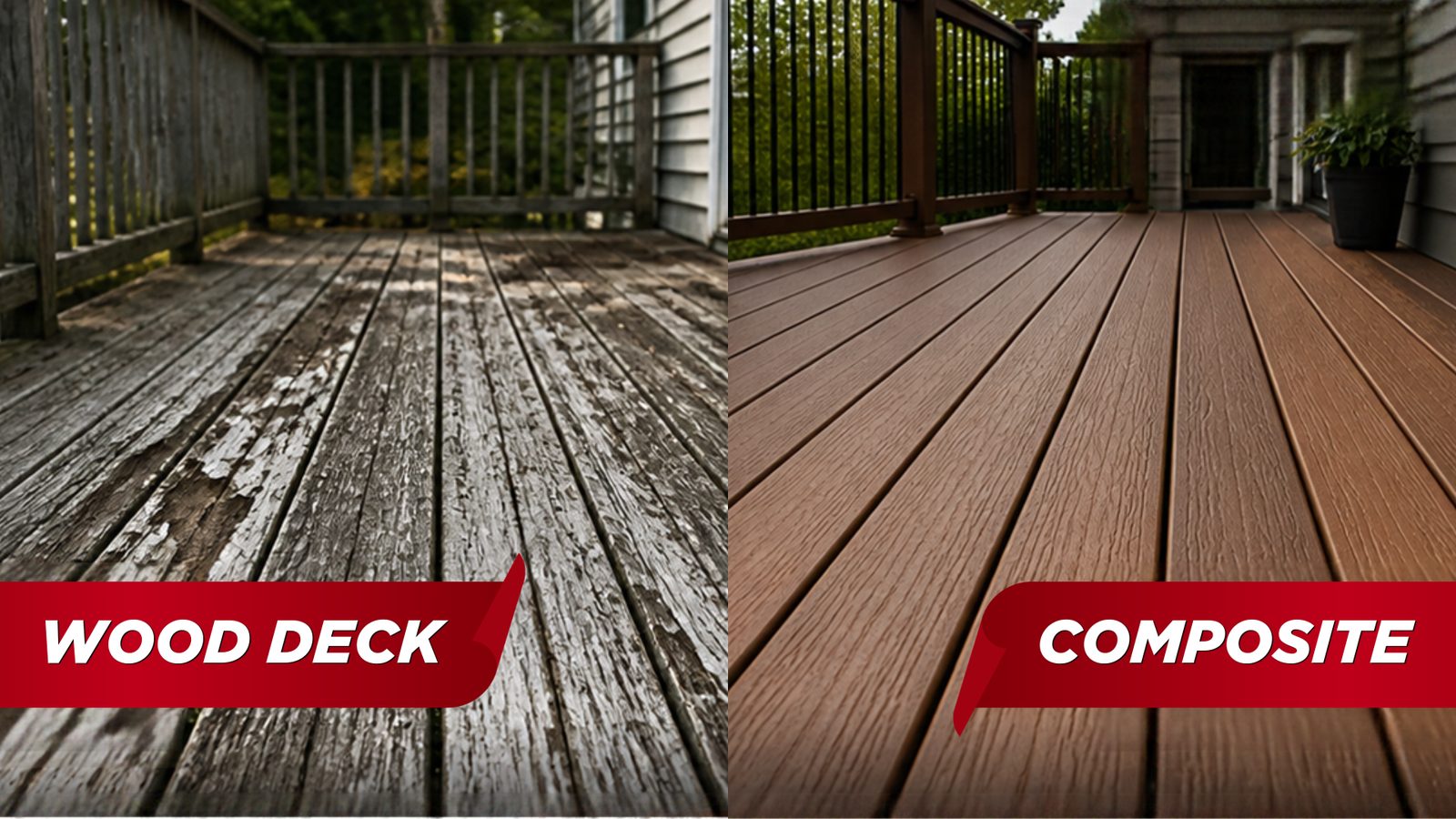
Building a deck should give you more room to relax, entertain, and enjoy your backyard, not another source of stress. Yet choosing the right material can be difficult when one option costs less today and another promises less maintenance tomorrow. The composite vs wood deck decision comes down to more than appearance: wood usually costs less to build, while composite usually costs less to keep up over the years you own it. Climate, installation quality, upkeep, and how long you plan to stay in your home all matter. This guide breaks down the differences so you can choose a deck that fits your budget and the way you actually live.
Right Roofing & Siding handles deck installation, replacement and repair across the Des Moines metro from its office in Urbandale, just northwest of Des Moines, serving communities such as Ankeny, Johnston and West Des Moines. On Episode 14 of the Right at Home podcast, "Composite Decks: More Than Just a Deck," which aired October 20, 2026, founder Ryan Johnson compared composite and wood with host Mike Downer. Figures from Ryan below are his own estimates from that conversation, not national averages.
What Is the Difference Between Composite and Wood Decking?
Composite decking is a manufactured board made from wood fibers and plastic, while wood decking is natural lumber, so the two are built differently and need different kinds of care.
What Is Composite Decking?
Most composite decking combines wood fibers or flour with plastic and additives. Many newer boards have a protective outer cap designed to resist stains, fading, and moisture better than exposed composite cores. Colors and textures vary, so some boards closely resemble natural lumber while others have a more uniform finish.
The Oklahoma State University Extension explains how wood particles and thermoplastics work together to create these manufactured products. However, composite boards are not interchangeable. Performance depends on the formulation, protective cap, and manufacturer instructions.
What Is Wood Decking?
Common choices include pressure-treated pine, cedar, and redwood. Pressure-treated lumber is often the budget-friendly starting point, while naturally durable species can cost more. Wood offers authentic grain and can be stained or painted to suit changing tastes.
Composite vs Wood Deck: Which Costs More Upfront and Over Time?
A wood deck usually costs less to build, while a composite deck usually costs less to keep up, so the cheaper choice depends on how long you will own it. A price quote tells you what a deck costs to build. It does not tell you what that deck will cost to own.
Initial Material and Installation Costs
Pressure-treated wood usually has a lower starting price than composite. Premium woods, however, can narrow that gap or exceed the price of some composite products. Labor also matters. Complex railings, stairs, picture-frame borders, and unusual layouts add expense regardless of surface material.
Composite systems may require approved fasteners and specific joist spacing. Some products also require extra blocking or careful spacing to accommodate movement. A fair estimate should identify the exact board line, framing plan, railing material, and installation details rather than simply saying “wood” or “composite.”
Maintenance and Replacement Expenses
Wood owners should budget for cleaning, periodic finishing, and occasional repairs. The frequency of staining or sealing depends on exposure, wood species, finish, and product directions. Boards may eventually need replacement if moisture damage or deterioration develops.
Ryan put a number on that cycle on Episode 14. After a homeowner pays for a new wood deck, he said, "you're looking at a minimum of three to five years before you're putting another thirty percent back into that thing."
Composite typically avoids routine sanding, painting, and staining. You still need cleaning supplies, inspections, and funds for occasional repairs. Scratched or damaged boards can sometimes be difficult to blend with surrounding material, particularly if a color has been discontinued.
Evaluating Total Cost of Ownership
Compare the complete cost over the years you expect to own the home. Add installation, cleaning materials, professional maintenance, repairs, and potential replacement to each estimate.
For example, a more expensive composite deck may make financial sense for someone who plans to stay twenty years and pays for wood refinishing. A homeowner moving in three years may value the lower initial expense more. Neither choice is automatically the bargain.
Durability and Lifespan: Which Decking Material Lasts Longer?
A well-built composite deck usually outlasts a wood deck that faces the same weather, though the product, sun exposure, framing and maintenance decide the real number. Ryan said on Episode 14 that a composite deck should last about 25 years, while most of the wood decks his team sees start showing problems around eight years in.
Wood may develop splits, raised grain, decay, or insect damage, particularly where water sits or finishes wear away. Pressure treatment and naturally durable species reduce some risks but do not eliminate them. The USDA Forest Service explains how moisture, preservation, and finishing affect wood's behavior and long-term performance.
Ryan also named carpenter bees as a wood deck problem, noting that they "don't sting, but they sure do a lot of damage."
Composite generally resists splintering and certain moisture-related problems better than untreated wood. Still, it can scratch, stain, expand with heat, or show fading. Some formulations can absorb moisture over time, so “rot-proof” should not be assumed for every product.
Look past a warranty's headline length. Check what it covers, what is excluded, whether labor is included, and which maintenance practices are required. Most importantly, remember that attractive decking boards cannot compensate for unsafe framing, loose connections, or poor drainage.
How Much Maintenance Does Each Deck Need?
A wood deck needs cleaning plus periodic staining or sealing, while a composite deck mostly needs an occasional wash, so composite takes far less of your time.
Maintaining a Wood Deck
Sweep away leaves and dirt, wash the surface as needed, and inspect boards and connections regularly. Depending on the finish and exposure, you may also need to clean, prepare, and recoat the wood periodically. Follow the coating manufacturer's directions instead of assuming every deck needs the same schedule.
Check for soft spots, splinters, loose fasteners, and pooling water. Addressing a small issue early is usually easier than replacing damaged sections later. Avoid aggressive pressure washing that can damage the wood fibers.
Ryan added that an uncovered wood deck in full sun can need redoing "every single year."
Maintaining a Composite Deck
Composite boards generally need washing with an approved cleaner and water, plus prompt removal of grease, food, and organic debris. Keep gaps clear so water can drain. Avoid harsh chemicals or abrasive tools unless your product's instructions specifically allow them.
Ryan described composite care simply: "You're just cleaning it once in a while, which is very easy to do."
Composite is low maintenance, not maintenance-free. Dirt, pollen, and leaves can still collect on the surface, and shaded areas may develop surface growth.
Choosing Based on Your Lifestyle
If you enjoy hands-on projects and love the changing character of natural wood, periodic upkeep may feel worthwhile. If you would rather spend Saturday hosting friends than refinishing boards, composite could be the more comfortable choice.
How Do Composite and Wood Decks Handle Iowa Weather?
Both can handle Iowa weather, but composite usually absorbs less moisture and skips the refinishing that sun and rain force on wood, while both need good drainage and correct fastening. Summer sunlight, spring rain, winter freezes, and changing humidity all affect exterior materials.
Wood absorbs and releases moisture, which can cause swelling, shrinking, checks, and movement. Finishes help manage exposure, but they need maintenance. Composite usually absorbs less moisture than solid wood, although it can expand and contract with temperature changes. Correct fastening and spacing are especially important.
Ryan has seen this on his own deck, where the one section exposed to the sun at all times was the part that failed early.
In direct sunlight, some composite surfaces can become uncomfortably hot. Dark colors often absorb more heat, but actual temperature varies by board construction, finish, and surroundings. Compare physical samples outdoors before committing to a shade.
For a west-facing deck that gets "blasted by the sun," Ryan suggests a lighter color, and he noted that a lot of composite decking now comes in cool-series colors that absorb less heat. A pergola with shades can make that side of the house more usable on summer afternoons.
Snow and ice require care with either material. Use cleaning methods approved for your decking, and avoid tools that gouge the surface. Good drainage, ventilation beneath the boards, and adequate clearance from soil help both options perform better.
Which Deck Looks and Feels Better to Use?
Wood gives you natural grain you can restain, while composite gives you consistent color and wood-look textures that cannot be sanded and refinished, so the better look depends on your taste and your home. For some homeowners, the flexibility of wood is part of the appeal.
Composite offers consistent colors and a range of textures, including realistic wood-look surfaces. Many systems also feature concealed fasteners for a cleaner appearance. Unlike wood, most composite boards cannot simply be sanded and restained when you want a different color.
Comfort matters too. Bare feet, children playing, pets, and outdoor dining all influence which surface feels right. Consider splinters, heat in direct sun, traction when wet, and how easily spills clean up. Slip resistance varies between individual products, so review testing information rather than assuming one material is always safer.
Ryan's team ties the deck into the home's siding, trim, roofing colors and landscaping, and he said a modern cable-style railing is the most popular choice right now.
Is Composite or Wood Decking Better for the Environment?
Neither is automatically greener, because each carries trade-offs in sourcing, manufacturing, upkeep and disposal. Wood is renewable when harvested responsibly, but its sourcing, treatment, finishing, and replacement needs influence its overall impact.
Some composite products contain recycled plastic and reclaimed wood fibers, but manufacturing also uses energy, and recycling a finished board may be difficult depending on local programs.
Ask suppliers about recycled content, responsible wood sourcing, product longevity, and end-of-life options. If sustainability is a priority, compare specific products instead of accepting broad claims that all wood or all composite decking is automatically greener.
How Do You Choose Between a Composite and Wood Deck?
Start with your budget, how long you plan to stay, and how much upkeep you will realistically do, then compare specific products and bids side by side.
When Wood May Be the Better Choice
Wood makes sense when the initial budget is tight, you want genuine grain, or you enjoy being able to refinish the surface. It can also be practical for smaller decks where maintenance is manageable. Just be honest about the time and money those future tasks require.
When Composite May Be the Better Choice
Composite is worth considering if you prioritize easier care, expect to stay long term, or want a consistent appearance without regular staining. Busy households may particularly appreciate the reduced finishing work. Compare actual product warranties and samples before choosing.
Ryan said many of the homeowners who call his team are simply tired of the staining, painting and board replacement a wood deck asks for every year or two, so they recover the deck in composite.
Questions to Ask Before Signing a Contract
Ask every contractor these questions before you sign a deck contract:
What exactly is included in the quote, including the board line, the framing plan and the railing?
How will the deck drain, and do the proposed boards suit your sun exposure?
What does the manufacturer require for joist spacing, fasteners and installation?
How will the deck connect to the house, and how will that connection be flashed?
Who handles permits and inspections?
The International Code Council highlights why secure connections between a deck and a home are essential. Surface material never replaces sound construction. Local code officials can clarify requirements for your project.
Before choosing, write up a side-by-side composite vs wood deck comparison with each bid's product names, warranties, and estimated upkeep. If you are still choosing a builder, see who builds composite decks in the Des Moines area and how Ryan's team plans a deck before work starts.
Ready to Plan a Deck That Works With Your Home?
A new deck should feel like an improvement, not an invitation to worry about repair bills, constant upkeep, or weather damage. Choosing materials carefully helps, but your outdoor space also needs to work with the exterior of your home.
Right Roofing & Siding builds new decks and replaces and repairs older ones in composite or pressure-treated wood, matched to the siding, trim and roof around them. To talk through your project, contact Right Roofing & Siding for a free consultation.
Frequently Asked Questions
Is Composite Decking Better Than Wood Decking?
For most homeowners who want less upkeep, yes, while wood may be better for initial affordability and natural appearance. The stronger choice depends on your budget, climate, and maintenance preferences.
Which Is Cheaper, Composite or Wood Decking?
Pressure-treated wood usually costs less initially. Composite often costs more to install but may reduce spending on staining and refinishing. Compare estimates and anticipated maintenance over your ownership period.
Is a Composite Deck Worth the Higher Price?
It often is for homeowners who plan to stay. Ryan Johnson of Right Roofing & Siding said that with a wood deck, "you're looking at a minimum of three to five years before you're putting another thirty percent back into that thing." Composite costs more upfront but removes most of that upkeep.
How Long Does Composite Decking Last Compared With Wood?
Ryan Johnson expects a properly installed composite deck to last about 25 years, while most wood decks his team sees start showing problems around eight years in. Actual service life depends on the product, environmental conditions, framing, and maintenance.
Does Composite Decking Get Hotter Than Wood?
Some composite boards become hotter in direct sunlight, especially darker finishes. On a west-facing deck, Ryan suggests a lighter color or a cool-series board that absorbs less heat, and it is wise to test samples on a sunny day before choosing.
Does Composite Decking Increase Home Value?
An attractive, well-built deck can improve outdoor appeal, but no material promises a higher resale price. Neighborhood expectations, deck condition, project cost, and buyer preferences all influence value.
Can Composite Boards Go on an Existing Wood Frame?
Sometimes, provided the framing is sound, properly spaced, and compatible with the selected boards. Have a qualified professional check joists, connections, drainage, and structural capacity before resurfacing.
Is Wood Decking Harder to Maintain Than Composite?
Generally, yes. Wood often needs periodic staining or sealing as well as cleaning. Composite usually needs regular washing and inspections but typically avoids repeated refinishing.